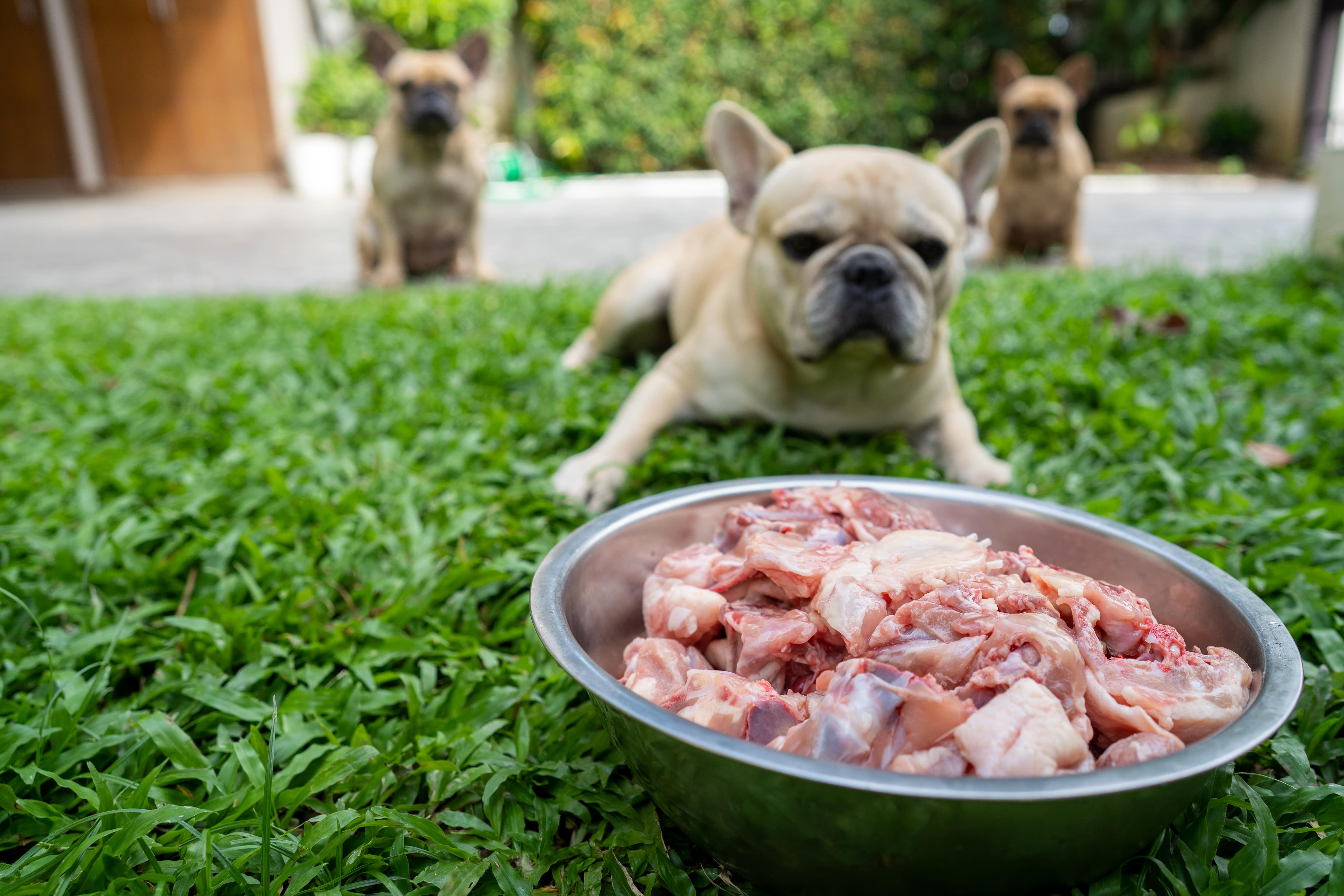
Balance the Diet
Aim to rotate 3–6 different protein sources regularly to ensure nutritional variety.
Meal Ratios
Choose one of the following balanced options:
Option 1 (Meat-Based Diet)
-
75% lean muscle meat
-
15% offals (organs)
-
10% bone
Option 2 (With Vegetables)
-
65% lean muscle meat
-
15% offals (organs)
-
10% bone
-
10% leafy greens (non-root vegetables)
Our raw foods are formulated to meet these recommended nutritional ratios.
Protein Categories
Feed as Muscle Meat
-
Lean muscle meats
-
Heart
-
Lungs
-
Tongue
-
Tendons
-
Stomach (unbleached green tripe)
Feed as Organs
-
Liver
-
Kidney
-
Spleen
-
Brain
-
Gizzard
-
Pancreas
Feed as Bone
-
Chicken necks
-
Beef brisket bone
-
Pork riblets
-
Turkey necks
-
Chicken backs/frames
-
Wings, feet, etc.
How Much to Feed?
Dogs should generally be fed 2–2.5% of their ideal body weight per day.
Daily Feeding Rate Chart (Based on Ideal Weight)
| Dog Weight (lbs) | Daily Amount @ 2% (lbs) | Daily Amount @ 2.5% (lbs) |
|---|---|---|
| 10 lbs | 0.20 lbs | 0.25 lbs |
| 20 lbs | 0.40 lbs | 0.50 lbs |
| 30 lbs | 0.60 lbs | 0.75 lbs |
| 40 lbs | 0.80 lbs | 1.00 lb |
| 50 lbs | 1.00 lb | 1.25 lbs |
| 60 lbs | 1.20 lbs | 1.50 lbs |
| 70 lbs | 1.40 lbs | 1.75 lbs |
| 80 lbs | 1.60 lbs | 2.00 lbs |
| 90 lbs | 1.80 lbs | 2.25 lbs |
| 100 lbs | 2.00 lbs | 2.50 lbs |
Important Feeding Note:
We recommend feeding based on your dog’s ideal body weight, not their current weight.
-
If your dog is underweight, feed for the higher (ideal) weight.
-
If your dog is overweight, feed for the lower (ideal) weight.
Adjust amounts gradually based on activity level, age, metabolism, and body condition.
Find the Right Raw Food for Your Dog
Explore our selection of balanced raw meals to suit your dog’s needs and feel free to book a nutrition consultation with our Clinical Holistic Pet Nutritionists and Master Herbalists.
Treats
Treats should always be fed in moderation and never as a meal replacement.
Important Treat Guidelines:
-
Always supervise your pet with chewy treats
-
Choose dehydrated or freeze-dried treats with no added ingredients
-
Opt for Canadian-sourced treats whenever possible
Treat Examples
-
Beef lung or liver
-
Chicken breast meat
-
Pig or cow ears
-
Pizzle
-
Sweet potato chews
-
Salmon and smelts
Check out our dehydrated treats for healthy snack options.
Know Your Poop
Some variation in stool color and consistency is completely normal, especially when feeding a varied diet. Changes are expected unless your dog eats the exact same food every day.
Try not to overthink stool changes unless your dog:
-
Cannot control bowel movements
-
Has frequent liquid stools
-
Is passing bright red blood
If your dog appears to be straining, consider:
-
Adding more water to meals
-
Increasing dietary fiber slightly
Transitioning to Raw Food
During the initial transition to raw feeding, you may notice:
-
White stool
-
Visible bone fragments
This is common while your dog adapts. Adding digestive enzymes, such as pancreas or gizzards, and/or green tripe during the transition can help improve bone digestion.
Stool Color Guide
| Colour | Possible Cause |
|---|---|
| White | Too much bone* |
| Black | Too much organ |
| Yellow | Normal on chicken-based diets |
| Runny | Not enough bone or overfeeding |
* Stool will naturally turn white when exposed to sunlight. Inspect stool immediately for accurate colour.